
ACL Tear and Reconstruction in San Antonio, TX
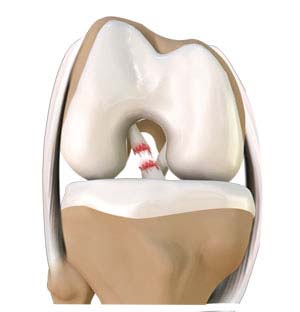
What Is an ACL Tear?
The anterior cruciate ligament runs diagonally through the center of the knee, controlling rotational stability and preventing the tibia from sliding forward on the femur. It is among the most commonly torn ligaments in sports — a statistic I see every week in my practice. The injury typically occurs with a sudden deceleration, pivot or change in direction, often without contact. Many patients describe a pop followed by rapid swelling and an immediate sense that the knee is not trustworthy.
ACL tears do not heal without surgical reconstruction. The ligament lacks the blood supply required for tissue repair, and an unstable knee that is not reconstructed is at significantly higher risk for secondary injury to the meniscus and cartilage — damage that compounds over time and accelerates arthritis. If you want to return to cutting, pivoting or competitive sport, reconstruction is the pathway.
Do You Need Surgery?
Not every ACL tear requires reconstruction. Older, lower-demand patients who are willing to avoid pivoting activities can function with physical therapy and a brace. However, I am direct with active patients: if you want to return to the sport or activity that tore the ligament, surgery is almost always the right answer. The knee that 'feels fine' with casual activity is often the one that gives way unexpectedly under sport-specific stress.
Graft Selection — What I Recommend and Why
The success of ACL reconstruction depends heavily on graft selection. I individualize this decision based on your age, sport, anatomy and tissue quality.
- Bone-patellar tendon-bone (BTB): The traditional gold standard for high-demand athletes in pivoting sports. Strong bone-to-bone healing makes it my preference for contact athletes, high-level competitors and revision cases.
- Hamstring autograft: An excellent option for lower-demand athletes and patients with anterior knee pain. Harvesting is less aggressive and the cosmetic result is favorable.
- Quadriceps tendon autograft: My growing preference for adolescent athletes, revision cases and patients with prior hamstring harvest. Strong tissue, excellent healing biology, minimal donor site morbidity.
- Allograft: Appropriate for older, lower-demand patients where donor site morbidity is a concern. I do not use allograft in young athletes or high-level competitors — the re-tear rate is higher.
I discuss graft options with every patient before surgery. This is your knee and your return to sport — you deserve to understand exactly what is going into it and why.
Pediatric ACL Tears — A Special Consideration
I treat ACL tears in skeletally immature athletes, including adolescents with open growth plates. This population requires specialized surgical technique to avoid growth plate injury while providing adequate stability for safe return to sport. Growth-sparing and physeal-respecting reconstruction techniques are part of my practice. If your child has torn an ACL, the growth plate question needs to be addressed before any surgical plan is made.
Recovery
- Month 1: Brace, early motion, quad activation, gait normalization
- Months 2 to 4: Progressive strengthening, proprioception, stationary bike
- Months 4 to 6: Running progression, sport-specific movement preparation
- Months 6 to 9: Return to sport testing and clearance for most athletes
Return to cutting and contact sport at 9 months has become a widely adopted standard supported by re-tear rate data. I do not clear athletes at 6 months simply because that was the historical expectation. Functional testing, symmetry measurements and honest assessment of neuromuscular readiness drive the clearance decision.
I treat ACL tears in athletes from youth through professional levels. If your child is a competitive athlete, the care approach is different from an adult and I tailor the program accordingly.
Ready to take the next step? Call (210) 878-4113 or request an appointment at sportssurgeryspecialist.com.