
Meniscus Repair in San Antonio, TX
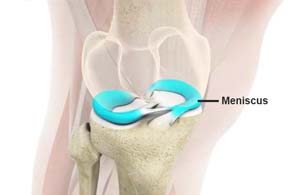
What Is the Meniscus?
Each knee has two menisci — a medial (inner) and a lateral (outer) — semicircular discs of fibrocartilage that sit between the femur and tibia. They serve as shock absorbers, distribute load evenly across the joint, stabilize the knee and contribute to lubrication of the cartilage. A knee without its meniscus loads the underlying articular cartilage unevenly and wears it faster. Meniscus preservation is not just about relieving today's pain — it is about protecting the joint long-term.
Types of Meniscus Tears
- Vertical/longitudinal tears — often repairable, particularly bucket-handle patterns in younger patients
- Radial tears — cut across the fibers and compromise load distribution significantly; selected cases are repairable
- Horizontal tears — common in older patients, less often repairable
- Root tears — a specific pattern at the attachment of the meniscus to the tibial plateau that causes rapid cartilage loss if untreated; these are under-recognized and very important to identify and repair
- Degenerative tears — fraying from wear-and-tear rather than acute injury; rarely benefit from surgery
Repair vs. Removal — Why This Decision Matters
When I take a patient to the operating room for a meniscus tear, my default intention is repair, not removal. Studies consistently show that knees that have undergone partial meniscectomy develop arthritis earlier than knees where the meniscus was successfully preserved. I remove meniscal tissue only when the tear is in an area without blood supply (where healing cannot occur), is severely degenerated, or is in a pattern that cannot be reliably restored.
Not all surgical groups approach meniscal repair as the priority. I am transparent with my patients about which tears I think are repairable, what the healing likelihood is based on tear location and blood supply, and what the downstream implications of removal versus repair are over the next decade.
Surgical Technique
Meniscus repair is performed arthroscopically using inside-out, outside-in or all-inside suture techniques depending on the tear location and pattern. The goal is to restore the meniscus to its anatomic position and secure it with enough fixation to heal. I protect meniscal repairs with a limited weight-bearing and range-of-motion protocol in the early postoperative weeks to give the tissue the best chance of successful healing.
Recovery From Meniscus Repair
Meniscus repair has a longer recovery than partial meniscectomy because healing tissue must be protected. Most patients are in a brace with limited flexion and partial weight-bearing for 4 to 6 weeks. Return to sport typically occurs at 4 to 6 months — longer than the 6-week timeline some patients expect. I explain this tradeoff clearly: a slower recovery now versus a higher cartilage protection over the life of the knee. For most active patients under 50, that tradeoff is worth it.
Ready to take the next step? Call (210) 878-4113 or request an appointment at sportssurgeryspecialist.com.