
Arthroscopic Rotator Cuff Repair
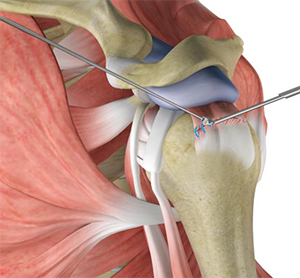
Arthroscopic rotator cuff repair is a minimally invasive surgical procedure used to treat torn rotator cuff tendons in the shoulder. This advanced technique uses a small camera and specialized instruments inserted through tiny incisions to repair damaged tissue. The goal is to relieve pain, restore strength and improve shoulder function while minimizing soft tissue disruption.
What Is Arthroscopic Rotator Cuff Repair?
Arthroscopic rotator cuff repair is a procedure in which a surgeon reattaches torn rotator cuff tendons to the head of the humerus using small incisions and a fiber-optic camera called an arthroscope. Compared to traditional open surgery, arthroscopy typically results in less postoperative pain, smaller scars. It is performed on an outpatient basis.
Anatomy
The rotator cuff consists of four muscles and their tendons that surround the shoulder joint:
- Supraspinatus
- Infraspinatus
- Subscapularis
- Teres minor
These tendons attach to the humeral head and work together to stabilize the shoulder and allow lifting and rotational movements. The rotator cuff keeps the ball centered within the socket during arm motion, providing both strength and stability.
Pathology
Rotator cuff tears may occur due to acute injury or gradual degeneration over time. Traumatic tears often result from falls or lifting heavy objects. Degenerative tears are more common with aging and repetitive overhead activities. When a tendon detaches from the bone, patients may experience pain, weakness and limited range of motion. If untreated, tears can enlarge and lead to chronic dysfunction.
When Is Arthroscopic Rotator Cuff Repair Recommended?
Surgery may be recommended when conservative treatments do not relieve symptoms and the patient has:
- A full-thickness rotator cuff tear
- Persistent shoulder pain lasting several months
- Weakness affecting daily activities or sports
- Failure to improve with physical therapy and possibly an injection
- An acute traumatic tear in an active individual
Imaging studies such as MRI help confirm the size and location of the tear.
What Does Preparation for Arthroscopic Rotator Cuff Repair Involve?
Preparation begins with a thorough orthopaedic evaluation and imaging. Patients may undergo medical risk stratification and lab testing if needed. Certain medications, especially blood thinners and GLP-1s, may need to be temporarily stopped. Patients are instructed about sling use after surgery and should arrange assistance at home during the early recovery phase.
How Is Arthroscopic Rotator Cuff Repair Performed?
The procedure is performed under regional and general anesthesia. The surgeon makes small incisions around the shoulder and inserts the arthroscope to visualize the joint. Specialized instruments are used to clean the area and prepare the bone. Sutures anchored into the humerus and different techniques are used to securely reattach the torn tendon to its original position. The incisions are then closed with sutures or sterile strips.
What to Expect During Recovery After Arthroscopic Rotator Cuff Repair?
Recovery requires patience and structured rehabilitation. A sling is typically worn for four to six weeks to protect the repair. Physical therapy begins with passive motion exercises, progressing gradually to active-assisted and then active movement and finally strengthening. Full recovery may take four to six months, depending on tear size and patient compliance. Most patients experience significant pain relief and improved shoulder function.
Quick Links
- Shoulder Anatomy
- Arthritis of the Shoulder
- Rotator Cuff Tear
- Shoulder Dislocation
- Frozen Shoulder
- Shoulder Instability
- Shoulder Fracture
- Biceps Tendon Rupture
- Shoulder Arthroscopy
- Total Shoulder Replacement
- Reverse Shoulder Replacement
- Shoulder Hemiarthroplasty
- Rotator Cuff Repair
- Shoulder Stabilization