
Shoulder Arthroscopy in San Antonio, TX
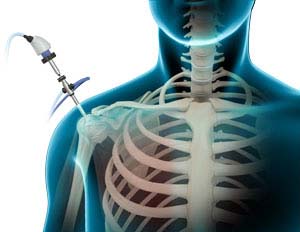
What Is Shoulder Arthroscopy?
Arthroscopy is a minimally invasive surgical technique that uses a small camera — an arthroscope — inserted through a dime-sized incision to visualize the inside of the joint in real time. Specialized instruments pass through additional small incisions to perform whatever repair or reconstruction the joint requires. For the shoulder, this platform has transformed what can be accomplished through tiny portals versus large open incisions.
Shoulder arthroscopy is not a specific procedure — it is an approach. I use it to perform rotator cuff repair, Bankart repair, SLAP repair, biceps tenodesis, subacromial decompression, AC joint resection, capsular release for frozen shoulder and a range of other procedures depending on what the joint needs. The benefits over open surgery include reduced infection risk, less postoperative pain, earlier range-of-motion recovery and smaller scars.
Common Conditions Treated Arthroscopically
- Rotator cuff tears — partial and full-thickness
- Labral tears — Bankart, posterior and SLAP lesions
- Shoulder instability and recurrent dislocation
- Subacromial impingement and bursitis
- Biceps tendon pathology — tenotomy and tenodesis
- Frozen shoulder — arthroscopic capsular release
- AC joint arthritis — distal clavicle resection
- Loose bodies and cartilage lesions
What to Expect on the Day of Surgery
Shoulder arthroscopy is performed as an outpatient procedure under regional nerve block combined with general or sedation anesthesia. The nerve block provides several hours of excellent postoperative pain control and significantly reduces your need for opioids on the day of surgery. You will go home the same day.
I position patients in either beach chair or lateral decubitus position depending on the procedure planned. Every case begins with a thorough diagnostic survey of the entire joint before any repair begins — findings that were subtle on MRI often become obvious under direct arthroscopic visualization, and I address them all in the same setting rather than leaving a secondary problem for a second surgery.
Recovery
Recovery varies by procedure. Subacromial decompression is a quick recovery — most patients regain motion within weeks. Rotator cuff repair and labral repair require protection of the healing tissue and follow a longer timeline. I give every patient a clear, written recovery roadmap specific to the procedure performed so there are no surprises about what to expect at each phase.
Ready to take the next step? Call (210) 878-4113 or request an appointment at sportssurgeryspecialist.com.
Quick Links
- Shoulder Anatomy
- Arthritis of the Shoulder
- Rotator Cuff Tear
- Shoulder Dislocation
- Frozen Shoulder
- Shoulder Instability
- Shoulder Fracture
- Biceps Tendon Rupture
- Shoulder Arthroscopy
- Total Shoulder Replacement
- Reverse Shoulder Replacement
- Shoulder Hemiarthroplasty
- Rotator Cuff Repair
- Shoulder Stabilization