Shoulder Stabilization Surgery in San Antonio, TX
Understanding Shoulder Instability
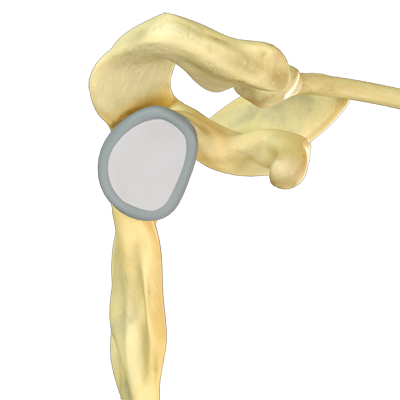
The shoulder is the most mobile joint in the body, and that mobility comes at the cost of inherent stability. The labrum — a ring of fibrocartilage that deepens the shallow glenoid socket — is the primary soft tissue stabilizer against dislocation. When the shoulder dislocates, the labrum typically tears away from the front edge of the socket. This injury, called a Bankart lesion, is what makes the shoulder vulnerable to repeated dislocations.
A first-time dislocation in a young athlete carries a high risk of recurrence without surgical stabilization — studies put that number above 80 percent in patients under 20. In my practice I see a full spectrum of instability: first-time dislocators weighing the evidence, patients who have dislocated dozens of times and are avoiding surgery out of fear, and athletes who cannot complete a season because their shoulder gives way unpredictably. Each situation requires a different conversation and often a different surgical plan.
Types of Instability I Treat
- Anterior instability — the most common type, typically from a Bankart tear, often combined with a Hill-Sachs impression on the humeral head
- Posterior instability — less common, often missed, frequently presents as pain with a specific arm position rather than frank dislocation
- Multidirectional instability — excessive laxity in multiple directions, more common in overhead athletes and hypermobile patients
- Instability with significant bone loss — requires a different surgical approach than soft tissue repair alone
Why Bone Loss Changes Everything
Not all instability surgery is the same. When repeated dislocations have eroded enough bone from the front of the glenoid, arthroscopic Bankart repair alone has unacceptably high failure rates. In those cases I perform a Latarjet procedure — a bone block reconstruction that transfers the coracoid process to the front of the glenoid, simultaneously restoring bone stock and adding a dynamic sling effect from the conjoined tendon. Correctly identifying which patients need bone block surgery versus soft tissue repair is one of the most important decisions in this specialty and requires careful preoperative imaging analysis.
I use CT scan with 3D reconstruction for every instability patient with a history of multiple dislocations to quantify glenoid bone loss before I recommend a surgical approach. Patients who have failed a prior Bankart repair almost always have unrecognized bone loss that was not adequately addressed at the first operation.
My Surgical Approach
For patients with minimal bone loss and intact tissue quality, I perform arthroscopic Bankart repair with capsular plication. This is a technically demanding procedure whose outcomes are directly dependent on anchor placement, tissue tension and addressing all components of the instability lesion — including the Hill-Sachs defect on the humeral head when it is large enough to engage the glenoid rim.
For patients with significant glenoid bone loss or failed prior soft tissue repair, I perform the Latarjet procedure. This is an open or arthroscopic-assisted procedure with a well-established track record in high-demand athletes and patients with bone loss. My approach to every instability case begins with the question: what does this specific shoulder need to not fail again?
Recovery
- Arthroscopic Bankart repair: sling for 4 to 6 weeks, motion progressive through weeks 6 to 12, return to contact sports at 5 to 6 months
- Latarjet: sling for 4 to 6 weeks, return to sport at 4 to 5 months in most cases
Athletes in contact or collision sports return on a timeline driven by neuromuscular readiness and surgical healing, not calendar dates. I do not clear a shoulder for return to sport until it is genuinely ready.
I treat pediatric and adolescent athletes as well as adults. If your child has dislocated a shoulder, early evaluation matters — the recurrence risk in young athletes is the highest of any age group.
Ready to take the next step? Call (210) 878-4113 or request an appointment at sportssurgeryspecialist.com.
Quick Links
- Shoulder Anatomy
- Arthritis of the Shoulder
- Rotator Cuff Tear
- Shoulder Dislocation
- Frozen Shoulder
- Shoulder Instability
- Shoulder Fracture
- Biceps Tendon Rupture
- Shoulder Arthroscopy
- Total Shoulder Replacement
- Reverse Shoulder Replacement
- Shoulder Hemiarthroplasty
- Rotator Cuff Repair
- Shoulder Stabilization