
Total Shoulder Replacement (Anatomic Shoulder Arthroplasty) in San Antonio, TX
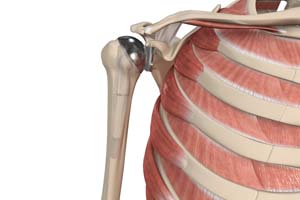
What Is Anatomic Total Shoulder Replacement?
Anatomic total shoulder replacement, also called shoulder arthroplasty, is a surgical procedure that replaces the damaged ball and socket of the shoulder joint with precisely shaped metal and high-density polyethylene implants. The word 'anatomic' means the implants replicate the natural geometry of your own joint: the metal ball resurfaces the top of the humerus, and a plastic socket is secured to the glenoid, restoring the smooth articulation that arthritis has destroyed.
Most patients who arrive at my office for this conversation have been managing shoulder arthritis for years. They have tried physical therapy, cortisone injections and activity modification. When those measures stop working and the pain begins interfering with sleep, work or the activities that define their quality of life, it is time to consider a definitive solution.
Who Is a Candidate?
Anatomic total shoulder replacement is the procedure of choice when all of the following are present:
- End-stage glenohumeral arthritis confirmed on X-ray or CT
- An intact, functional rotator cuff — this is the critical anatomic requirement that separates candidates for anatomic from reverse replacement
- Failed conservative treatment (therapy, injections, activity modification) over a reasonable period
- Pain and functional limitation significant enough to justify the recovery commitment
Age alone is not a determining factor. I routinely perform shoulder replacement in patients in their 40s and 50s — active, working individuals who cannot afford to live in pain. The conversation about implant longevity, activity expectations and revision planning is different for a 52-year-old than for a 72-year-old, and I have that conversation honestly before any decision is made.
Common Symptoms of End-Stage Shoulder Arthritis
- Deep, constant shoulder pain that is no longer responsive to injection or medication
- Significant loss of range of motion; difficulty reaching overhead, across the body or behind the back
- Night pain severe enough to disrupt sleep
- Grinding, grating or a mechanical sensation with shoulder movement
- Muscle weakness and fatigue around the shoulder
My Surgical Approach
I perform anatomic total shoulder replacement through a deltopectoral approach — the standard and most durable access for this procedure. I pay meticulous attention to subscapularis management, as how that tendon is handled and repaired at the end of the case has a direct impact on your rotational strength and long-term function. Some patients are even candidates for a subscapularis sparing approach.
For glenoid preparation, I use patient-specific instrumentation when anatomy or version abnormality warrants it, drawing on CT-based preoperative planning tools to optimize component position. Glenoid loosening is the most common long-term failure mode in anatomic shoulder arthroplasty, and precise positioning at the time of surgery is the best protection against it. I use mixed reality, navigation and patient specific implants and other advanced technology depending upon the patient and the disease process.
I offer stemless humeral implants for appropriate patients; higher-demand individuals who may require revision in the future benefit from bone preservation at the proximal humerus. This is a nuanced decision I make based on bone quality, anatomy and your specific long-term goals.
Recovery
- Weeks 1 to 4: Sling use, pendulum exercises and passive motion under therapist guidance based on fixation and implant choices
- Weeks 4 to 8: Progressive active range-of-motion, light activities of daily living
- Months 2 to 4: Strengthening program, most daily activities unrestricted
- Months 6 to 9: Return to sports, recreation and lifting for appropriate patients
The majority of my total shoulder replacement patients report significant pain reduction within the first six to eight weeks. Full strength and function typically at the six-month mark, with continued improvement through the first year.
Why Choose Dr. Lynch for Shoulder Replacement
Shoulder arthroplasty is a technically demanding procedure with outcomes that are highly sensitive to surgical precision, particularly glenoid component placement and soft tissue balance. I have dedicated fellowship training in shoulder arthroplasty and perform this procedure regularly, including complex primary cases involving significant bone loss or anatomic deformity. I use preoperative CT planning on every arthroplasty patient. You will see me and my PA, not a resident or medical student in the pre-operative visit, in the operating room and at the follow-up visits.
TruOrtho is San Antonio's only all-women, fellowship-trained orthopedic subspecialty practice. Private-pay and commercial insurance patients welcome.
Ready to take the next step? Call (210) 878-4113 or request an appointment at sportssurgeryspecialist.com.
Quick Links
- Shoulder Anatomy
- Arthritis of the Shoulder
- Rotator Cuff Tear
- Shoulder Dislocation
- Frozen Shoulder
- Shoulder Instability
- Shoulder Fracture
- Biceps Tendon Rupture
- Shoulder Arthroscopy
- Total Shoulder Replacement
- Reverse Shoulder Replacement
- Shoulder Hemiarthroplasty
- Rotator Cuff Repair
- Shoulder Stabilization