
Rotator Cuff Repair in San Antonio, TX
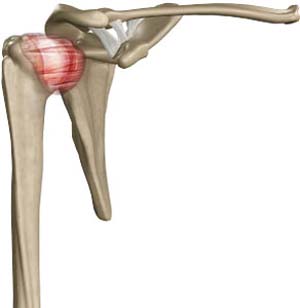
What Is a Rotator Cuff Tear?
The rotator cuff is a group of four tendons — the supraspinatus, infraspinatus, teres minor and subscapularis — that work together to hold your arm in the shoulder socket and power every rotation and lift. When one or more of those tendons tear, even simple movements like reaching overhead or lifting a coffee mug become painful, weak or impossible.
Tears fall into two broad categories. Acute tears happen suddenly — a fall onto an outstretched arm, a heavy lift gone wrong, a collision on the field. Degenerative tears build over time as the tendon gradually frays from repetitive strain or age-related wear. Many of the patients I see arrive with a chronic tear that has quietly worsened for months before the pain finally forces them to act. Both types are treatable, and most patients who commit to the right plan — surgical or non-surgical — get back to the activities they care about.
Common Symptoms
Rotator cuff tears present differently depending on size, acuity and your activity level. The symptoms I hear most often include:
- Deep, aching pain in the shoulder that worsens at night or when you lie on that side
- Weakness when lifting the arm forward or rotating outward
- A painful arc between roughly 60 and 120 degrees of elevation
- Difficulty reaching behind your back — fastening a bra, tucking in a shirt
- A catching or grinding sensation with movement
A complete tear often causes a noticeable drop in strength that a partial tear does not. If you cannot raise your arm above your shoulder after an acute injury, seek evaluation promptly.
How I Diagnose a Rotator Cuff Tear
Diagnosis begins with a thorough physical examination. I test specific muscle groups in isolation to identify which tendon is involved and how severely it is affected. I pay close attention to scapular mechanics and cervical spine findings because neck pathology frequently mimics rotator cuff disease and must be ruled out before surgery is considered.
Imaging confirms the clinical picture. MRI remains the gold standard for characterizing tear size, tendon quality and the degree of muscle atrophy — all of which directly influence the surgical plan and the likelihood of a successful repair. In patients with metal hardware or in situations where MRI is equivocal, I use ultrasound or CT arthrogram as complementary tools.
When Is Surgery Necessary?
Not every rotator cuff tear requires surgery. Partial-thickness tears in lower-demand patients often respond well to a structured course of physical therapy, activity modification and, when appropriate, a single corticosteroid injection to reduce acute inflammation. I do not advocate injecting the same region repeatedly — it weakens tissue and delays the conversation about definitive treatment.
Surgery becomes the recommended path when:
- A full-thickness tear is causing significant weakness or functional limitation
- Symptoms persist or worsen despite three to six months of dedicated non-operative care
- The tear occurred acutely in a younger, active patient where healing potential and long-term function are priorities
- Imaging shows a large or massive tear at risk of further retraction and muscle atrophy
Earlier surgical intervention for full-thickness tears in active patients generally produces better outcomes. Retracted tendons with atrophied muscle become harder to repair and harder to heal. I would rather have this conversation before the window for a strong repair closes.
My Surgical Approach
I perform rotator cuff repair arthroscopically in all of my cases. Arthroscopy allows me to see the entire shoulder joint through small incisions, address co-existing problems like biceps pathology or subacromial impingement in the same setting, and begin your rehabilitation earlier than an open approach allows.
The repair itself involves re-anchoring the torn tendon back to the humeral head using suture anchors placed precisely at the anatomic footprint. I pay close attention to restoring the true attachment footprint: not just approximating the tendon, because that detail matters for long-term strength and durability. For larger or more complex tears, I may use a double-row technique that creates a broader, more anatomic contact surface.
When a tear is irreparable due to severe retraction and muscle atrophy, I discuss reconstruction alternatives including superior capsule reconstruction or, in appropriate patients, lower trapezius tendon transfer, which is a procedure I have training and experience in performing.
What to Expect During Recovery
Recovery from rotator cuff repair takes time and commitment. I will not minimize that. The tendon-to-bone healing process takes a minimum of three months, and your program is structured around protecting that healing while preventing stiffness.
- Weeks 1 to 6 (this timing is variable): Sling immobilization, passive range-of-motion exercises performed by a therapist
- Weeks 6 to 12: Active-assisted and then active motion, gradual strengthening begins
- Months 3 to 6: Progressive resistance, sport-specific or work-specific activity
- Months 6 to 12: Return to full activity for most patients
Athletes returning to overhead sports, throwing or heavy lifting may require 9 to 12 months before I clear them to compete. Rushing this timeline is the most common cause of re-tear, and I take an individualized approach to every return-to-activity decision.
Why Patients Choose Me for This Procedure
My entire practice is built around the shoulder. Rotator cuff repair is one of the highest-volume procedures I perform, and I have pursued additional training in complex and revision cases — including massive tears and situations where prior repairs have failed. I operate at a private surgical facility where you will see me at every step of your care, not a resident or mid-level provider. My rehabilitation protocols are tailored to your specific tear pattern, tissue quality and goals, not a generic handout!
TruOrtho is San Antonio's only all-women, fellowship-trained orthopedic subspecialty practice. Every physician here has completed additional fellowship training beyond residency.
Ready to take the next step? Call (210) 878-4113 or request an appointment at sportssurgeryspecialist.com.
Quick Links
- Shoulder Anatomy
- Arthritis of the Shoulder
- Rotator Cuff Tear
- Shoulder Dislocation
- Frozen Shoulder
- Shoulder Instability
- Shoulder Fracture
- Biceps Tendon Rupture
- Shoulder Arthroscopy
- Total Shoulder Replacement
- Reverse Shoulder Replacement
- Shoulder Hemiarthroplasty
- Rotator Cuff Repair
- Shoulder Stabilization