
Pyrocarbon Hemiarthroplasty
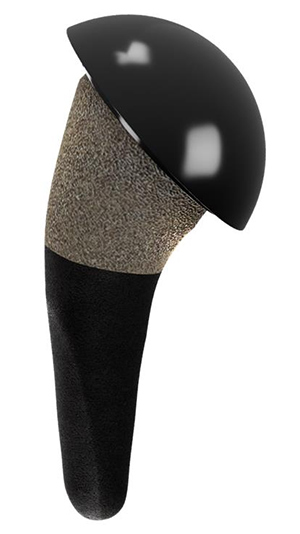
Pyrocarbon hemiarthroplasty is a joint-preserving surgical procedure used to treat certain types of shoulder arthritis and humeral head damage, particularly in younger or more active patients. Instead of replacing both sides of the shoulder joint, this procedure resurfaces only the humeral head (the “ball”) with a pyrocarbon implant. Pyrocarbon is a durable, biocompatible material designed to reduce wear on the natural socket while maintaining more normal joint mechanics.
What Is Pyrocarbon Hemiarthroplasty?
Pyrocarbon hemiarthroplasty is a partial shoulder replacement in which the damaged humeral head is replaced with a pyrocarbon prosthesis, while the patient’s natural glenoid (socket) is preserved. The goal is to relieve pain, maintain bone stock, and potentially delay or avoid the need for a total shoulder replacement. Pyrocarbon has a smooth surface and elastic properties are designed to be more cartilage and bone friendly compared to traditional metal implants.
Anatomy
The shoulder is a ball-and-socket joint made up of:
- The humeral head (ball)
- The glenoid (socket) of the shoulder blade
- Articular cartilage that cushions joint surfaces
- The rotator cuff muscles and tendons that stabilize the joint
- The surrounding capsule and ligaments
In a healthy shoulder, cartilage allows smooth movement between the humeral head and glenoid. Preserving the socket can be beneficial, especially in younger patients with adequate cartilage remaining on the glenoid side.
Pathology
Pyrocarbon hemiarthroplasty is often considered in cases of humeral head arthritis, avascular necrosis, or cartilage damage where the glenoid cartilage is relatively preserved. It may also be used for certain post-traumatic conditions. By replacing only the damaged humeral surface, the procedure addresses pain while minimizing alteration of the socket. However, if significant glenoid arthritis is present, a total shoulder replacement may be more appropriate.
When Is Pyrocarbon Hemiarthroplasty Recommended?
This procedure may be recommended when conservative treatments fail and the patient has:
- Isolated humeral head arthritis
- Avascular necrosis of the humeral head
- Post-traumatic humeral head damage
- Preserved or minimally worn glenoid cartilage
- Younger age with a desire to preserve bone for future procedures
Careful imaging and clinical evaluation help determine candidacy.
What Does Preparation for Pyrocarbon Hemiarthroplasty Involve?
Preparation includes a comprehensive orthopedic assessment and imaging studies such as X-rays or CT scans to evaluate bone and cartilage condition. Risk stratification may be required. Patients are counseled on expectations, recovery timelines, and postoperative rehabilitation. Arranging help at home during the early recovery period is recommended.
How Is Pyrocarbon Hemiarthroplasty Performed?
The procedure is performed under anesthesia through an incision at the front of the shoulder. The damaged humeral head surface is removed, and the bone is prepared to accept the pyrocarbon implant. The prosthesis is carefully positioned to restore joint alignment and smooth motion while preserving the natural glenoid. The incision is then closed, and the arm is placed in a sling.
What to Expect During Recovery After Pyrocarbon Hemiarthroplasty?
Recovery typically involves wearing a sling for several weeks, followed by structured physical therapy. Early rehabilitation focuses on gentle range-of-motion exercises, progressing to strengthening over time. Most patients experience pain relief and improved mobility, with continued gains over several months. Long-term follow-up is important to monitor glenoid health and implant performance.
Quick Links
- Shoulder Anatomy
- Arthritis of the Shoulder
- Rotator Cuff Tear
- Shoulder Dislocation
- Frozen Shoulder
- Shoulder Instability
- Shoulder Fracture
- Biceps Tendon Rupture
- Shoulder Arthroscopy
- Total Shoulder Replacement
- Reverse Shoulder Replacement
- Shoulder Hemiarthroplasty
- Rotator Cuff Repair
- Shoulder Stabilization